


A Practical Guide for Pastors
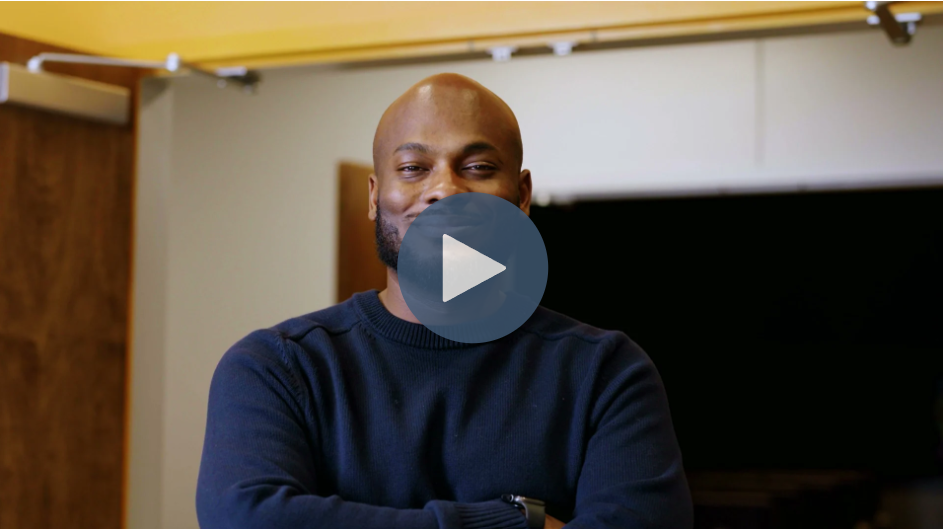
Excerpt from Pastor's Video Series [Free Access]
Table of Contents
Section 1: Why This Makes Sense Right Now
Section 2: The Financial Picture
Section 3: Designing a Space that Works
Section 4: The Part That Goes Beyond Desks and Wi-Fi
Section 5: Navigating the Hard Questions
Section 6: Church Coworking Launch Checklist
Section 7: Stories from the Field
The Building Is Already There. So Are the People.
There is a good chance your church building is empty right now. Not on Sunday — on Tuesday. On Thursday morning. On that weird Wednesday afternoon stretch between staff meeting and prayer service. The lights are off, the parking lot is quiet, and somewhere nearby, a freelancer is trying to find a decent Wi-Fi signal at a coffee shop table the size of a dinner plate.
These two realities belong together.
Over the last five years, the way Americans work has shifted in ways that will never return. Nearly 28 million people were full-time independent workers in 2024, more than double the number from 2020. Gen Z and Millennials are starting businesses at a rate that is 567% higher than older generations did at the same age. Half of all Gen Zers want to run their own business. Seven out of ten people who have started a business say they did it because they wanted control over their time and their life.
They are moving into your zip code. They are already in your pews — or they used to be. And they are working alone, struggling with isolation, and asking questions about money and calling and purpose that the church is actually equipped to answer, if only we show up in the right room at the right time.
Churches that open coworking spaces are showing up in the right room. This guide is about how to do it well — the practical steps, the financial realities, the things nobody tells you until you are halfway through a renovation, and the deeper opportunity sitting underneath all of it: discipling entrepreneurs in the place where they actually live their lives.
SECTION ONE
Why This Makes Sense Right Now
Your Building Is an Asset You Are Not Using
Most church facilities sit empty roughly 80% of the time. The mortgage still runs. The utilities still run. The HVAC is either fighting summer heat or trying to keep pipes from freezing, and you are paying for all of it whether anyone is inside or not.
That is not stewardship. It is just overhead.
The shift is simple: stop thinking of your building as a venue that hosts events and start thinking of it as a community asset that serves people. Fellowship halls become open workspaces. Classrooms become private offices or meeting rooms. A church library becomes the best quiet zone in the neighborhood. Parking lots that sit empty on weekdays become a premium amenity that commercial coworking operators charge extra for.
You already own the real estate. That is the single biggest barrier every commercial coworking operator has to overcome, and you have cleared it before the project even starts.
The People You Want to Reach Are Already Working This Way
This is not a niche trend. The best estimates put the combined impact of remote work and entrepreneurial activity at around 80 to 90 million Americans — more than half the workforce. Many of them work from home, which sounds great until you do it for six months straight and realize that the lines between work and rest have completely dissolved.
They want a place to go. Not a corporate tower. Not a chain coworking brand with a $400 monthly hot desk fee. Something closer. Something human. Something that does not feel like it is trying to extract maximum value from every square foot.
Your church already has a reputation in the neighborhood. People may not know your theology, but they know you feed people on Saturdays and your parking lot hosts the food truck rally every June. That trust is a foundation that commercial coworking brands spend years and significant marketing dollars trying to build.
The Numbers That Should Make You Pay Attention
Full-time independent workers more than doubled from 13.6 million in 2020 to 27.7 million in 2024. By 2027, freelancers are projected to make up over 50% of the U.S. workforce. Of current gig workers, 55% are Millennials and 24% are Gen Z — the same generations the church is working hardest to reach and losing most consistently.
When Founders Table Network surveyed a group of entrepreneurs in 2024, the majority said they did not even feel comfortable bringing a business-related prayer request to church. They compartmentalize their faith and their work because the church has not created space for those two worlds to meet.
A coworking space changes that. Not by force, but by presence.
->Get free resources to start gathering entrepreneurs
SECTION TWO
The Financial Picture
How the Revenue Model Actually Works
The revenue comes from membership. You offer access to workspace in exchange for a monthly fee, and you tier that access based on what people need. A day-pass for the occasional visitor. A part-time membership for someone who needs the space two or three days a week. A full membership for someone who treats your space like their office. Private rooms or dedicated desks provided a premium for those who need consistency and privacy.
The range varies enormously by location. Urban markets can support rates that rural ones cannot. But here is the thing most churches underestimate: you do not need to compete with WeWork. You need to break even, or better, and generate enough margin to fund the ministry you care about. Because you own the building, your cost structure looks nothing like a commercial operator. That gap is your advantage.
Some churches designate coworking revenue for specific purposes — youth ministry, benevolence funds, or community development work. That intentionality matters. It connects the everyday act of someone paying for a desk to something larger, and it gives you a story to tell your congregation about why this is worth doing. This allows your co-working neighbors to join you in a cause they can care about too.
What You Will Actually Spend
The startup costs are real and you should not underestimate them. Furniture that is comfortable enough for eight-hour workdays. Business-grade internet — not the residential service you have been running, but actual fiber or equivalent with enough bandwidth to handle a room full of people on video calls simultaneously. A door access system that lets members come and go without a staff person needing to unlock the building. Acoustic treatments, because church buildings are often designed to amplify sound in ways that are terrible for focused work. Signage. A coffee setup. (Don’t forget the coffee!) Software to handle bookings and billing.
Start conservatively. Convert one room, not the whole building. See who shows up, what they need, and what does not work. You will learn more in three months of actual operation than in six months of planning.
The Break-Even Reality
Before you spend anything, do the math. What are your fixed costs — utilities, internet, insurance, any staff time? What does the membership need to cover those? How many members at what rate gets covered? This is your break-even number.
In most markets, a modest coworking operation can cover its operating costs at 15 to 25 active members. That is not a big number. It is a Tuesday morning with a room that feels reasonably full. The question is not whether this can be financially viable — it can. The question is whether your community has enough people who need it. Survey them before you build anything.
SECTION THREE
Designing a Space That Works
What People Actually Need
Remote workers and entrepreneurs do not all need the same thing at the same time. Some days you need a quiet corner and headphones-in focus. Other days they need a table big enough to spread out and a whiteboard. Some calls require a door that closes. Some conversations happen naturally over the coffee machine.
Good coworking space makes room for all of this. An open area with enough desks and outlet access for general work. A room or two that can be booked for calls, interviews, or small team meetings. A kitchen or break area where community actually forms — because more real connections happen over coffee than at formal networking events. A quiet zone with an expectation that noise stays low.
You do not need to nail all of this on day one. You need to get the basics right and stay responsive to what your members tell you.
The Internet Question
Do not cut corners here. Nothing will end your coworking experiment faster than slow or unreliable Wi-Fi. Members will forgive a lot — mismatched furniture, a coffee maker that takes too long, a booking system that is clunky. They will not forgive losing a client call because your network went down.
Invest in business-class fiber if it is available in your area. Set up the network so it can handle peak load, which means every desk is occupied and everyone is on a video call at the same time. Add a guest network separate from your church administrative systems. Test it before you open (please).
Acoustics Are Underrated
Church architecture is often the enemy of productive work. High ceilings, hard floors, and reflective walls are beautiful for worship but challenging for concentration. Sound bounces everywhere. A room that feels reverent on Sunday morning feels like an echo chamber on Monday when someone is trying to write.
Strategic acoustic panels, area rugs, soft furniture, and white noise systems can transform the feel of a space without a major renovation. It is worth getting this right early because members who leave because the space is too noisy rarely come back.
SECTION FOUR
The Part That Goes Beyond Desks and Wi-Fi
Entrepreneurs in Your Building Are Not Just Customers
Here is where this gets interesting.
The person who shows up at your coworking space to write code or run a small business or manage client accounts is not just renting a chair. They are a person navigating the loneliness of working alone. They are making decisions every day that carry real moral weight — about how to treat employees, about what to charge, about whether the business they are building reflects the person they want to be. They are asking questions about whether what they are doing matters, in the eternal sense of that word.
The church has always had something to say about those questions. The problem is we have mostly said it on Sunday mornings in a language that does not always translate to Monday through Friday.
A coworking space creates natural proximity. Relationships form. Trust builds. And when trust builds, the real conversations can begin.
Entrepreneur Discipleship: What It Actually Looks Like
Founders Table Network (founderstablenetwork.org) has built a curriculum specifically for this moment. Their model is a kick off event followed by a small group that gathers entrepreneurs around a dinner table — literally — and works through the intersection of faith and business in a way that is practical, honest, and grounded in Scripture.
The format is not a business seminar with a prayer at the beginning. It is discipleship that takes seriously the fact that a business owner's Monday through Friday is where most of their spiritual formation actually happens. It addresses the confusion at the intersection of faith and profit. It builds the kind of community that staves off the loneliness that entrepreneurship creates. It helps people hear God's voice in the context of their work.
"This was exactly what I needed to stave off the loneliness that comes with entrepreneurship, the confusion of the intersection of faith and profit, and the honor in following God in this way." — Marissa E., Entrepreneur
For a church running a coworking space, this kind of small group is a natural next step. The people are already in your building. The relationships are already forming. The Founders Table curriculum gives you a structure for going deeper with them.
Churches in 2026 can apply for a grant through Founders Table Network to launch this program with their coworking community. The model is designed to be led by a facilitator — not necessarily a pastor — and can either fit into the small group model already running in a church or as a stand alone activity similar to men’s or women’s ministries.
->How to pastor entrepreneurs, really. [on demand videos]
Why This Matters for Your Church
Entrepreneurs and business owners are exactly the kind of people Andy Stanley is talking about when he says, 'If you want me to follow you on a journey, you have to come get me. The journey must begin where I am, not where you are or where you think I should be.'
When these small groups run inside a church coworking space, something shifts. The building is no longer just a place to work. It becomes a place where faith is integrated into work, where business owners find community and accountability, and where the church demonstrates that it cares about the Monday through Friday version of people's lives — not just the Sunday morning version.
The testimonies from entrepreneurs who have gone through the Founders Table curriculum are consistent: they come in skeptical about whether a church-based small group can speak to what they are actually dealing with. They leave changed.
"Through the Founder's Table, I learned to see my industry in light of God's calling and how his purposes can be reflected in my business." — Christina H., Entrepreneur
"My business is teaching me how to be a Christian." — Erika B., Entrepreneur
SECTION FIVE
Navigating the Hard Questions
What Do You Do When Your Congregation Pushes Back?
Some people in your church will have concerns. They may worry about strangers in the building, about the commercialization of sacred space, about liability, about whether this is really what the church is supposed to be doing. These are not bad questions. They deserve honest answers.
The question that churches will face when they open coworking spaces is predictable: you’re just a landlord now. And if all you do is collect membership fees and keep the Wi-Fi running, that criticism lands. The difference between a church-run coworking space and a commercial one is not the price of the desk or the quality of the coffee — it is what happens in the room over time.
Discipleship programs like Founders Table Network are what keep this from drifting into a facility management project. When a business owner sits down with six other entrepreneurs and starts asking out loud whether the way she runs her company actually reflects what she says she believes, that is not a networking event. That is formation. That is the church doing what the church is supposed to do, in a room full of people who might never have walked through the door on a Sunday morning. The coworking space creates proximity. The small group creates depth. Without both, you have a nice amenity. With both, you have a ministry — one that meets people in the middle of their actual lives and walks with them into something larger than a profitable quarter or a growing client list. Keeping that intentionality alive is an act of leadership. It requires a pastor who is willing to say, regularly and out loud, that this building exists not to generate revenue but to make disciples — and that the revenue is simply what makes the mission sustainable.
The financial case matters here — showing that the coworking space generates meaningful revenue that funds ministry and reduces the burden on the congregation's giving. But the mission case matters more. When you can tell a story about a business owner who worked in your space for six months and came to faith, or who joined a small group and restructured their entire business around Kingdom values, the abstract concerns tend to quiet down.
Start with a pilot. Invite people into the process. Be transparent about what is working and what is not. Include skeptics in the planning rather than dismissing their concerns.
The Zoning Question You Need to Ask Early
Some church properties are zoned strictly for religious use. Adding a coworking operation — even a nonprofit, community-focused one — may require a zoning variance or a conditional use permit. This is not usually a dealbreaker, but it can take time, and it is much easier to navigate before you have already spent money on furniture and internet upgrades.
Talk to your municipality early. Most local governments are supportive of creative community uses for underutilized space, but they have processes, and those processes move on their own timeline. Build this into your planning.
Insurance and Liability
Your existing church insurance policy may not cover coworking operations. Work with an agent who understands both church liability and commercial space operations. You need general liability for people on the property, property coverage for increased daily use, and clear member agreements that set expectations about liability for personal property. This is not complicated, but it does need to be addressed before you open, not after someone breaks an ankle on a threshold you knew was uneven.
Keeping the Faith Identity Without Alienating Non-Members
One of the more nuanced questions is how explicitly to express your church's identity in the coworking space. The honest answer is that there is no single right approach, and the right answer probably looks different for an urban church in a highly secular neighborhood than it does for a congregation in a community where faith is already part of the shared cultural air.
What most churches land on is something like this: be transparent about who you are and why you are doing this, make everything optional, and let the quality of the space and the genuine warmth of the community do most of the work. The entrepreneur small group through Founders Table is opt-in, not a requirement of membership. The prayer room is available, not mandatory. The Sunday services are announced, not pushed.
People can smell inauthenticity from a long way off. If you create a coworking space primarily as a funnel for church membership, they will feel that. If you create it because you genuinely believe that supporting their work is a form of ministry, and you are willing to let relationships form at whatever pace they form, they will feel that too.
SECTION SIX
Stories From the Field
Urban: A Fellowship Hall That Became a Hub
A Presbyterian church in San Francisco converted their fellowship hall into a coworking space. Thirty regular members now work there. The revenue funds their youth programs and covers a significant portion of building maintenance. More importantly, several of those members who came in as pure coworking customers have become connected to the congregation — not through any programmatic pressure, but because relationships formed and they got curious.
Suburban: Meeting Parents Where They Are
A Methodist church in suburban Chicago recognized that a significant portion of its potential membership base was working parents — people who had traded office jobs for remote work and were trying to manage the collision of professional and home life under one roof. They built their coworking space around that need, adding childcare options during school breaks. The people who found them became loyal advocates, not because the space was exceptional, but because the church understood their actual lives.
Rural: Becoming the Economic Hub
A Baptist church in rural Oregon made an investment in fiber internet that most businesses in the area did not have, then converted their education wing into a workspace. They now serve professionals across a twenty-mile radius who work remotely for urban companies. In their community, the church has become an economic development tool — a reason someone can stay in the area they love instead of following the work to a city. That kind of tangible, practical impact in a community is its own form of witness.
->Where to start with entrepreneurs
SECTION SEVEN
Church Coworking Launch Checklist
Use this as a roadmap, not a rigid script. Every church's context is different. Adjust the timeline and the priorities to match your situation, your resources, and your community.
Phase 1: Vision and Assessment (Months 1–2)
Leadership and Congregational Buy-In
- Secure pastoral and board support before spending a dollar
- Form a small launch team — you need someone who understands facilities, someone who understands money, and someone who can talk to people
- Write down in one sentence what you want this to accomplish and why it aligns with your church's mission
- Present the vision to your congregation and actually listen to the concerns that come back
- Identify potential congregation members who might use or help run the space
Market Research
- Survey church members about interest and what they would pay
- Research existing coworking options within five miles and their pricing
- Estimate how many remote workers and entrepreneurs live within a reasonable commute
- Talk to ten potential users before designing anything
- Identify what local need you can meet that others are not meeting
Facility Assessment
- Walk your building with fresh eyes and map every usable space
- Identify which spaces are genuinely unused during business hours
- Assess current internet speed — run a speed test during a busy Sunday morning to simulate load
- Note any ADA or building code issues that would need to be addressed
- Get rough renovation cost estimates before presenting a financial plan
Ministry Planning
- Consider how you will embed ministry and discipleship opportunities
- Think through staffing options and who you want to be relating daily
- Are there believing entrepreneurs that you can “seed” into the space to help set the tone
- What can you to do help set the culture in your space to make is a place of peace and productivity as an expression of the Kingdom of God
- How will use of the space add complications or obligations to other ministry activities
- Do you want to engage the Founder's Table as a resource.
Phase 2: Planning and Design (Months 3–4)
Financial Planning
- Build a startup budget that includes every cost, not just the big ones
- Create a three-year financial projection using conservative membership assumptions
- Set your membership tiers and pricing
- Calculate your break-even member count at each tier
- Identify where the startup capital comes from
- Set up separate accounting for coworking operations from day one
Legal and Regulatory
- Check your zoning — verify that coworking operations are permitted on your property
- Apply for any necessary permits or variances early (these take longer than you think)
- Update your insurance coverage before anyone enters as a member
- Have an attorney review your membership agreement
- Create a clear, readable policies document
Space Design
- Draw a floor plan that includes open workspace, at least one private meeting room, and a kitchen or break area
- Plan your acoustic strategy — this is not optional
- Map every outlet and plan additional power where needed
- Choose furniture that works for eight-hour workdays, not just looks good in photos
- Plan your door access and security system
Phase 3: Setup and Infrastructure (Months 5–6)
Technology
- Upgrade to business-class internet with adequate bandwidth for peak usage
- Install a Wi-Fi system with full coverage and no dead zones
- Set up a member network separate from your church administrative network
- Purchase and configure a keypad or fob-based door access system
- Set up video conferencing equipment in your meeting room(s)
- Choose and configure your booking and billing software
Physical Setup
- Complete renovations
- Install furniture and workstations
- Stock the kitchen — good coffee is not optional
- Add acoustic panels, rugs, or other sound management
- Install clear interior and exterior signage
- Create a welcoming entrance area
Phase 4: Soft Launch (Month 7)
- Invite 10 to 15 church members or trusted contacts to test the space before opening publicly
- Offer a free or discounted trial period during the soft launch
- Gather specific feedback on internet reliability, noise levels, furniture comfort, and booking process
- Test all technology systems under real load — multiple users on video calls simultaneously
- Document every issue and fix it before public launch
- Train any staff or volunteers who will support operations
- Consider launching your first Founders Table small group with your soft launch cohort
Phase 5: Public Launch (Month 8)
- Launch a simple, clear website or webpage describing the space and membership options
- Announce through all church communication channels
- Host an open house — let people see and feel the space
- Reach out to your local Chamber of Commerce or business association
- Create a referral incentive for existing members
- Add the space to coworking directories and local business listings
- Set up a social media presence — even a simple Instagram showing the space and community goes a long way
Phase 6: Ongoing Operations (Month 9 and Beyond)
Monthly
- Review financial performance against your projections
- Collect and act on member feedback
- Host at least one community-building event per month — lunch, a speaker, anything that gets people away from their screens and into conversation
- Restock supplies
Quarterly
- Report results to church leadership — both the financial numbers and the mission stories
- Evaluate your marketing approach and adjust what is not working
- Review pricing against the local market
- Survey member satisfaction formally
Annually
- Complete a full financial review
- Renew insurance and any necessary licenses
- Conduct a strategic planning session — is the space achieving its mission goals?
- Celebrate wins with your members and your congregation
CONCLUSION
The Table Is Already Set
There is a version of this where a church opens a coworking space and it is a real estate strategy. A way to offset building costs. A savvy financial move. And there is nothing wrong with that.
But there is a bigger version. It is the version where a business owner comes in to find a quiet place to work and ends up in a conversation that changes the trajectory of their company — and their life. Where an entrepreneur who has never felt like the church had anything to say about her Monday-through-Friday life discovers a community of people who are wrestling with the same questions she is. Where a pastor gets to see, up close, the way God is moving in the marketplace, and the church becomes a place that people in the community genuinely need — not just on Sunday, but all week long.
Don’t downplan the power of inspiration and encouraging people’s gifts. It can go a long way to move them into pathways of faith.
That version is available to you. The building is there. The people are in your community. The curriculum to disciple them well already exists — Founders Table Network has done that work, and they are actively looking for churches ready to use it.
The question is not whether this is possible. It is whether you are willing to open the door.
"We believe the entrepreneurs in your church are ready to multiply your impact. All you have to do is invite them to your table." — Founders Table Network
Get Started
To learn more about the Founders Table small group curriculum and the grant available for churches launching entrepreneur discipleship programs in 2026, visit founderstablenetwork.org.
The grant is available to 100 churches in 2026. The application takes less than a meeting's worth of time. The return on that investment is harder to quantify — but the testimonies are real.
founderstablenetwork.org
540-779-8896
.jpg)
.jpg)
.jpg)